Culturally Safe Learning Environment
The new Standards for Registered Training Organisations (RTOs) 2025 have introduced the requirement that the RTO learning environment fosters a culturally safe learning environment for First Nations people, as this is essential for the success and well-being of First Nations vocational education learners. To support a culturally responsive learning environment, this article aims to provide practical strategies for supporting an inclusive and culturally secure environment for First Nations learners, trainers, and support staff.
These suggestions originate from my enriched experiences as a non-Indigenous trainer with Aboriginal and Torres Strait Islander students from many nations and working alongside First Nations trainers. These suggestions are also not an exhaustive list of possibilities to explore with your team and will vary from learner cohort to learner cohort, as First Nations cultures and students are not a homogenous group, and success strategies must be locally contextualised.
Understanding Cultural Safety
Cultural safety is about supporting an environment where First Nations people feel respected, valued, and safe to express and learn their cultural identity. This involves a multi-layered approach, including appointing First Nations training and support staff, ensuring cultural competence among all staff, developing a both-ways learning framework, embedding First Nations content, flexible delivery, and embracing peer learning.
Both-Ways Learning
The concept of both-ways learning, introduced by Marika in 1999, with the analogy of a lagoon where the sea (salt water) meets the fresh water, symbolizing cultures working together while preserving and respecting each other. This approach encourages mutual respect and collaboration, allowing both cultures to learn from each other while preserving their unique identities.
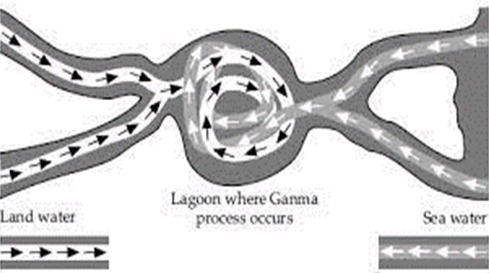
Image produced by Marika (1999).
Supporting Culturally Supportive Environment
Infusing First Nations cultural knowledge, perspectives, practices, and values into the learning environment and curriculum makes learning relevant and meaningful. Practical examples may include:
- Offer professional development to all staff on cultural safety and sensitivity, encouraging staff to examine their own biases and assumptions.
- Provide professional development to all learners on cultural awareness to promote a harmony in the RTO.
- Embed culturally relevant case studies in learning and assessment and include First Nations local stories, experiences and knowledge.
- Acknowledge the contribution of First Nations Peoples to society, both past and present.
- Be flexible and gain an understanding of cultural responsibilities, such as attending ceremonies or community events.
- Support the revitalisation of local language by using words and terms in the learning environment. This can include using bilingual signs in the RTO and community lead naming of projects and events in the local language.
- Display the Aboriginal and Torres Strait Islander flags, First Nations art and any visual cultural materials that signify inclusion and respect. If you get the opportunity, hold art exhibitions and cultural performances.
- Participate in cultural event and activities and hold regular cultural celebrations on your RTO’s campus and include traditional food preparation or catering.
- Respect cultural protocols and practices, such as acknowledging Traditional Custodians of the land at the beginning of events, when welcoming guest speakers, and at graduations.
- Provide the cultural space for storytelling sessions and yarning circles.
- Seek feedback with First Nations learners and communities to ensure the environment meets their expectations.
- Recognise the diversity of First Nations communities and avoiding one-size-fits-all approaches, as every community is unique.
- Support a learning environment that develops peer learning.
Peer Learning
Peer learning and the relationship with other learners plays a significant role in the retention of First Nations learners in vocational education and training (VET). Positive connections between learners create a sense of solidarity, support, and teamwork, forming a community of learners that is both separate from and connected to their community and family support.
In conclusion, supporting culturally responsiveness learning is essential for strengthening VET retention and outcomes. By incorporating these strategies into the RTOs policy planning and Training & Assessment Strategies, we can embrace the both-ways learning framework and support First Nations success through a nurturing and responsive learning journey.
We will continue to explore shaping organisational culture, staff cultural competence and the need to increase employment of First Nations trainers and support staff in RTOs. For more articles on supporting First Nations vocational learners, please visit https://www.harrisstyles.com.au/news-advice/.
References
Bat, M., Kilgariff, C., & Doe, T. (2014). Indigenous tertiary education – we are all learning: both-ways pedagogy in the Northern Territory of Australia. Higher Education Research & Development, 33(5), 871-886. http://doi.org/10.1080/07294360.2014.890575
Guenther, J., Bat, M., Stephens, A., Skewes, J., Boughton, B., Williamson, F., Wooltorton, S., Marshall, M., & Dwyer, A. (2017). Enhancing training advantage for remote Aboriginal and Torres Strait Islander learners. NCVER. https://www.ncver.edu.au/research-and-statistics/publications/all-publications/enhancing-training-advantage-for-remote-aboriginal-and-torres-strait-islander-learners
Hearn, S., & Kenna, L. (2020). Spending for success: identifying ‘what works?’ for Indigenous student outcomes in Australian Universities. The Australian Journal of Indigenous Education, 1-10. https://doi.org/10.1017/jie.2020.27
Marika, R. (1999). Milthun latju wana romgu yolnu: valuing Yolnu knowledge in the education system. Ngoonjook Journal of Australian Indigenous Issues, (16), 107–120.
Taylor, E.V., Lalovic, A., & Thompson, C. (2019). Beyond enrolments: a systematic review exploring the factors affecting the retention of Aboriginal and Torres Strait Islander health students in the tertiary education system. International Journal for Equity in Health, 18(136), 1-19. https://doi.org/10.1186/s12939-019-1038-7
Wilks, J., Dwyer, A., Wooltorton, S., & Guenther, J. (2020). ‘We got a different way of learning’: A message to the sector from Aboriginal students living and studying in remote communities. Australian Universities Review, 62(2), 25-38. https://search.informit.org/doi/abs/10.3316/INFORMIT.398466108983059